retreat@sitaramayurveda.com
 +91 813 8888 912

Dhanyamla Dhara Benefits: Understanding Its Procedure, Uses and Ayurvedic Approach

By Vignesh Devraj
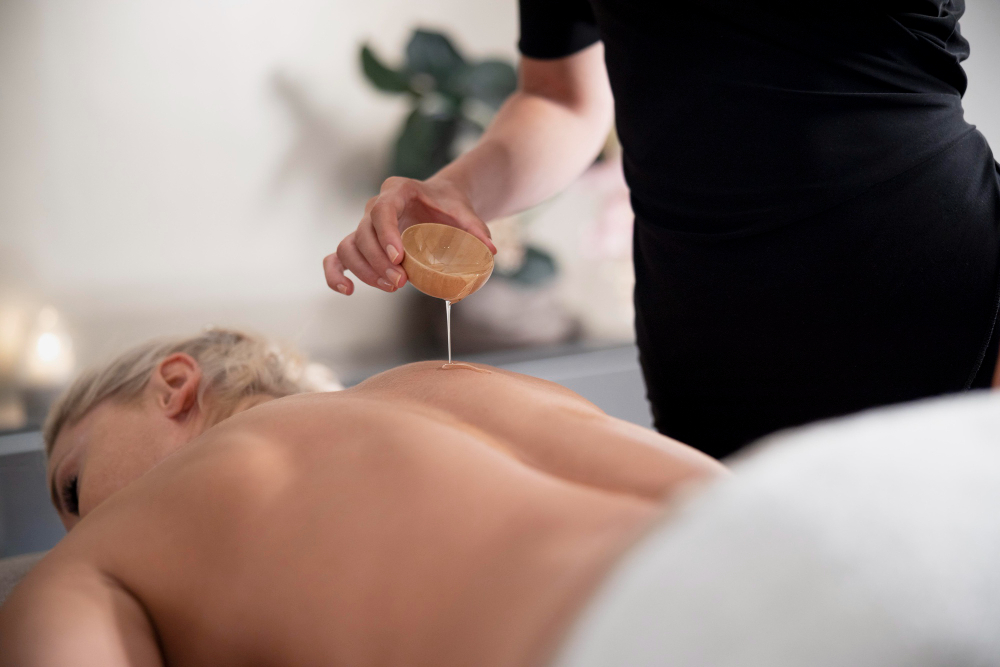
Dhanyamla Dhara benefits are traditionally associated with easing pain and stiffness, supporting circulation and providing a warming, soothing external Ayurvedic treatment. The therapy uses a warm fermented grain-based herbal decoction poured continuously over the body or a specific area. Its suitability depends on individual Ayurvedic assessment.
Dhanyamla Dhara is a traditional Ayurvedic therapy used within personalised care for concerns such as pain, stiffness and inflammatory complaints. At Sitaram Retreat, it is offered as part of a broader physician-guided Ayurvedic approach. If you are considering this therapy, understanding its traditional benefits, procedure and suitability is the best place to begin.
What Is Dhanyamla Dhara?
It is an external Ayurvedic therapy in which a warm, fermented grain-based herbal decoction is poured continuously over the whole body or a specific affected area. The preparation is maintained at a consistent temperature. “Dhanya” refers to grain, “amla” to something sour or fermented, and “dhara” to a continuous stream or pouring. Sitaram Retreat describes the decoction as grain-fermented.
Dhanyamla Dhara Benefits
Its benefits should be understood within traditional Ayurvedic practice. Sitaram Retreat describes it as being used for pain, inflammation, arthritis, rheumatism and circulation-related concerns.
May Support Relief From Pain and Stiffness
Warm, continuous application can create a soothing experience for muscles and joints. Traditionally, the therapy may be considered when stiffness, heaviness or physical discomfort are part of an individual’s presentation.
Traditionally Used for Inflammatory Complaints
The therapy is traditionally used for inflammatory and rheumatic complaints, including arthritis and rheumatism. Traditional use should not be confused with a guaranteed medical outcome; persistent swelling or severe pain deserves appropriate medical evaluation.
May Support Circulation
Sitaram Retreat describes the therapy as enhancing blood and lymph circulation. The warmth and steady application are traditionally valued as part of the treatment experience.
May Support Mobility and Physical Comfort
Stiffness can make ordinary movement uncomfortable. Within an Ayurvedic plan, a warming external therapy may be selected to support comfort and ease.
Used in Selected Wellness and Weight-Management Programmes
Sitaram Retreat also associates the therapy with fat reduction and clearing blockages from circulating channels. These statements reflect the Ayurvedic framework and should not be interpreted as a guaranteed weight-loss result.
Explore, Ayurvedic treatment for stress to support relaxation, emotional balance, and overall well-being.
How Does the Therapy Work?
From an Ayurvedic perspective, the temperature, treatment area, use of oil and supporting therapies can be adjusted according to the person’s needs.
The continuous stream keeps the warmth and formulation in consistent contact with the skin for the prescribed period. Professional supervision matters because the therapy should not simply be copied from an online recipe.
Explore, ayurvedic treatment for sleep improvement for better relaxation, restful sleep, and overall well-being.
Dhanyamla Dhara Procedure: What to Expect
Although the exact protocol may vary, the basic procedure involves assessment, preparation, controlled warming and continuous application.
1. Ayurvedic Assessment
The practitioner considers symptoms, physical condition and treatment goals to determine whether the therapy is suitable and whether it should be applied locally or over the body.
2. Preparation of the Decoction
A fermented grain-based herbal preparation is made according to the Ayurvedic protocol. The liquid is then warmed to the required temperature before application.
3. Application
The warm decoction is poured continuously over the affected area or across the body. Sitaram Retreat notes that the treatment can be performed with or without oil application.
4. Maintaining the Flow
A continuous stream and suitable temperature are maintained for the prescribed period. Sitaram Retreat states that the used decoction is collected, reheated and used again during the prescribed treatment period.
5. Post-Treatment Care
The practitioner may recommend rest, dietary measures or supportive therapies according to the overall programme. Individual aftercare advice should be followed.
Explore, what is panchakarma treatment to understand its traditional Ayurvedic approach and how it is used to support cleansing, balance, and overall well-being.
Who May Consider This Therapy?
It may be considered within an Ayurvedic programme for people experiencing:
- Joint or muscular stiffness
- Physical discomfort or pain
- Rheumatic complaints
- Selected inflammatory conditions
- A feeling of heaviness or sluggishness
- Wellness programmes where an external therapy is appropriate
Suitability should be decided through professional assessment of overall health, strength, constitution and treatment needs.
Dhanyamla Dhara for Arthritis and Joint Discomfort
Arthritis and rheumatic complaints are among the conditions for which Sitaram Retreat describes this therapy as traditionally therapeutic. Warm, continuous application may be incorporated into an Ayurvedic plan where pain, stiffness and mobility are considered together.
Because arthritis has different causes and forms, new, severe or worsening symptoms require appropriate medical assessment. This therapy should not replace necessary diagnosis or medical treatment.
Learn, the panchakarma meaning to understand its traditional Ayurvedic principles and role in promoting balance and overall well-being.
Is It the Same as Kanji Dhara?
The terms are sometimes used interchangeably in discussions of Ayurvedic therapies because both can involve fermented preparations and continuous pouring. However, names, ingredients and treatment protocols may differ between traditions and practitioners.
If you encounter both terms online, do not assume every formulation is identical. Ask the practitioner which preparation is being used, how it is prepared and why it has been selected for your treatment.
Discover, abhyanga benefits for relaxation, nourishment, improved circulation, and overall Ayurvedic wellness.
Can It Be Done at Home?
It is better to undergo this therapy under qualified professional supervision. Preparing a fermented decoction, controlling its temperature and maintaining a continuous flow require care.
Home experimentation can overlook skin sensitivity, the appropriate treatment area and other health concerns.
A professional setting allows the treatment to be monitored and adjusted according to the person’s needs and response.
How Long Does the Treatment Take?
There is no single duration that applies to everyone. Session length and the overall programme depend on the individual’s condition and the physician’s recommendations.
Sitaram Retreat lists preparation of 3–5 days, main cleansing of 5–7 days and rejuvenation of 5–7 days. These are broader programme categories, not a fixed session length.
Is It Safe for Everyone?
No Ayurvedic therapy should automatically be considered suitable for everyone. Professional assessment is especially important with diagnosed conditions, significant pain or inflammation, skin sensitivity, acute illness or other health concerns.
The practitioner can decide whether modifications are needed or another treatment is more suitable. If you receive conventional medical care, discuss complementary therapies with your healthcare professional when appropriate.
Why Choose Sitaram Retreat for Ayurvedic Care?
The value of an Ayurvedic therapy lies not only in the procedure but also in how appropriately it is selected and administered. Sitaram Retreat places its therapies within a broader treatment environment where individual needs can guide the care plan.
Its treatment centres include the Beach Retreat in Thrissur, the Mountain Retreat in Munnar and Sitaram X The Postcard in Old Goa, with a range of Ayurvedic therapies available alongside personalised care.
Explore, Shirodhara massage to learn about this traditional Ayurvedic therapy and its potential benefits.
Experience Personalised Ayurvedic Care at Sitaram Retreat
If you are considering Dhanyamla Dhara for pain, stiffness or broader wellness, start with a personalised Ayurvedic assessment. At Sitaram Retreat, the therapy forms part of individualised Ayurvedic care.
Speak with the Sitaram Retreat team to understand whether it fits your needs and goals, and explore the Dhanyamladhara service before beginning your treatment journey.
Frequently Asked Questions
Q1. How is Dhanyamla Dhara performed?
A warm fermented grain-based herbal decoction is poured continuously over an affected area or the whole body for a prescribed period. It may be performed with or without oil, depending on the Ayurvedic treatment plan.
Q2. Can Dhanyamla Dhara help with joint pain?
It is traditionally used for pain and stiffness associated with conditions such as arthritis and rheumatic complaints. Its suitability depends on individual assessment and it should not replace medical diagnosis.
Q3. Is this therapy suitable for everyone?
No. An Ayurvedic practitioner should assess your health, symptoms, strength and treatment needs before recommending it. People with significant medical concerns should also seek appropriate medical advice.
Q4. Will Dhanyamla Dhara reduce inflammation?
It is traditionally used for inflammatory complaints, and Sitaram Retreat lists reducing inflammation among its stated benefits. This should be understood as a traditional Ayurvedic claim, not a guaranteed medical result.
Q5. What is used in the treatment?
A warm fermented herbal decoction is prepared with grains and other ingredients according to the Ayurvedic protocol. The exact preparation can vary based on individual treatment needs.
Q6. Why is the liquid kept warm?
Warmth is an important part of the traditional procedure. The preparation is maintained at a suitable temperature while being continuously poured over the selected area or body.
Q7. How long does a treatment programme last?
There is no universal programme length. Sitaram Retreat lists preparation, main cleansing and rejuvenation phases of 3–5, 5–7 and 5–7 days respectively, but these refer to broader programme categories rather than one fixed session.
Q8. What should I do before choosing this therapy?
Speak with a qualified Ayurvedic practitioner about your symptoms, medical history and treatment goals. Professional assessment helps determine whether this therapy or another approach is more appropriate.
TABLE OF CONTENTS
- What Is Dhanyamla Dhara?
- Dhanyamla Dhara Benefits
- How Does the Therapy Work?
- Dhanyamla Dhara Procedure: What to Expect
- Who May Consider This Therapy?
- Dhanyamla Dhara for Arthritis and Joint Discomfort
- Is It the Same as Kanji Dhara?
- Can It Be Done at Home?
- How Long Does the Treatment Take?
- Is It Safe for Everyone?
- Why Choose Sitaram Retreat for Ayurvedic Care?
- Experience Personalised Ayurvedic Care at Sitaram Retreat
- Frequently Asked Questions