retreat@sitaramayurveda.com
 +91 813 8888 912

Talam Panchakarma: Understanding Talam Treatment in Ayurveda

By Vignesh Devraj
Talam Panchakarma refers to using Talam therapy within a broader Ayurvedic or Panchakarma care programme. Talam itself is an external therapy where a medicated herbal paste is applied to a specific area of the head. It is not one of the five principal Panchakarma procedures, although it may be included in personalised care.
Talam Panchakarma is often used to describe Talam therapy when it forms part of a wider Ayurvedic treatment programme. Talam involves applying a specially prepared medicated paste to the head, while Panchakarma is a structured Ayurvedic treatment approach. At Sitaram Retreat, Talam is selected according to individual assessment. Understanding this distinction makes the therapy easier to appreciate. Learn the panchakarma meaning to understand the principles of this traditional Ayurvedic practice and its role in supporting overall well-being.
What Is Talam in Ayurveda?
Talam is a traditional Ayurvedic external therapy in which a prepared medicated paste is applied to a specific area of the head. The preparation may combine herbal powder with oil or a decoction, with ingredients selected according to the intended therapeutic purpose and the individual’s Ayurvedic assessment.
The approach is personalised rather than identical for everyone. In Ayurveda, treatments, herbs, oils and formulations can be selected according to a person’s constitution, present condition and therapeutic requirements.
Talam is traditionally associated with relaxation, restful sleep and mental calm. Depending on the preparation selected, it may also be considered for irritability, sinus-related discomfort, cold and cervical discomfort. These applications form part of an Ayurvedic care plan rather than representing guaranteed outcomes.
Is Talam Part of Panchakarma?
A common question is whether Talam Panchakarma is itself one of the five main Panchakarma procedures. The answer is no. Talam is an external Ayurvedic therapy and is distinct from the five principal cleansing procedures of Panchakarma.
However, the two can be part of the same treatment journey. During a Panchakarma stay, an Ayurvedic physician may include suitable external therapies alongside the main programme when they fit the individual’s needs.
This distinction matters because Panchakarma is not simply a collection of every Ayurvedic therapy offered at a retreat. It is a structured approach with specific procedures, while therapies such as Talam can be incorporated when appropriate. Discover ayurvedic treatment for stress to learn about traditional Ayurvedic practices that may support relaxation, stress management, and emotional well-being.
How Does Talam Panchakarma Treatment Work?
The Talam procedure is straightforward but carefully administered.
- Assessment: An Ayurvedic physician evaluates the individual’s condition and treatment requirements.
- Preparation: A therapist prepares a suitable mixture using herbal powder with oil or a decoction.
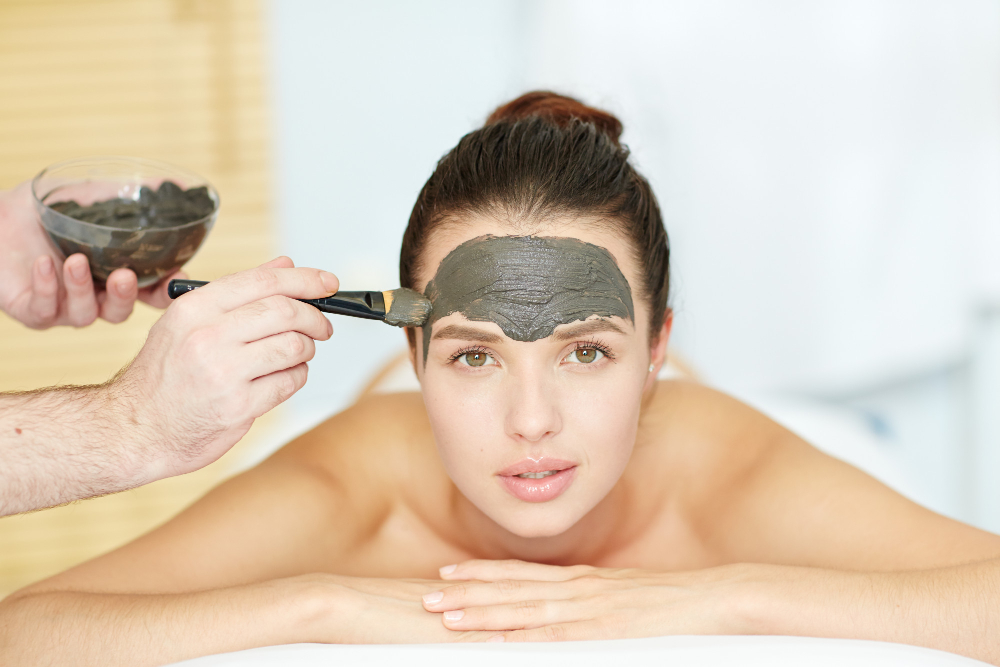
- Application: The medicated preparation is applied to a specific point on the scalp.
- Resting period: The paste remains in place for the recommended duration.
- Completion: The treatment is completed according to the practitioner’s guidance.
At Sitaram Retreat, the paste is generally kept in place for around one to two hours, depending on the condition and the physician’s recommendation. The ingredients and preparation are not treated as fixed formulas; they are selected according to therapeutic requirements. Explore panchakarma treatment benefits to learn about the traditional Ayurvedic therapy’s potential role in relaxation, digestive wellness, and supporting overall mind-body balance.
What Are the Traditional Benefits of Talam?
The benefits of Talam depend on the herbs used, the individual’s needs, and the wider Ayurvedic care plan. Traditionally, the therapy may be selected to support:
- Relaxation and a sense of mental calm
- Restful sleep
- Relief from irritability and emotional restlessness
- General head and brain-related wellbeing
- Supportive care for sinusitis and cold-related discomfort
- Comfort in cases of cervical discomfort when considered appropriate
These are traditional Ayurvedic applications rather than guaranteed medical outcomes. Talam should therefore be understood as part of an individually planned approach rather than as a universal treatment for a particular condition.
Talam for Sleep and Mental Relaxation
Sleep and relaxation are among the common reasons people explore Talam therapy. A carefully selected medicated paste may be used within an Ayurvedic programme when the treatment plan calls for a calming external therapy.
Talam for sleep is traditionally associated with supporting relaxation and restful sleep. The suitability of the treatment depends on the individual’s condition, constitution and treatment goals.
Rather than assuming that the same preparation works for everyone, Ayurvedic care considers the person as a whole. This allows the practitioner to determine whether Talam is appropriate and which preparation best fits the intended purpose. Explore ayurvedic treatment for mental health to understand traditional Ayurvedic approaches to emotional balance and overall mental wellness.
Talam for Sinus-Related Concerns
Depending on the herbs selected, Talam may also be considered as supportive Ayurvedic care for sinusitis and cold-related discomfort. The preparation is chosen according to the intended therapeutic purpose rather than using one standard mixture for every person.
Anyone with persistent or severe sinus symptoms should seek appropriate medical evaluation rather than relying on an external Ayurvedic therapy alone.
Talam vs Shirodhara: What Is the Difference?
Talam and Shirodhara are both traditional Ayurvedic therapies associated with the head, but their methods are different.
| Talam | Shirodhara |
| Uses a prepared medicated paste | Uses a continuous stream of selected liquid |
| Applied to a specific area of the head | Liquid is directed over the forehead/head area |
| Paste remains in place for a set period | Treatment involves continuous pouring for the prescribed duration |
| Preparation varies according to the treatment plan | Liquid preparation varies according to the treatment plan |
Neither therapy should be selected simply because it is popular. An Ayurvedic practitioner can determine which approach fits the individual’s needs. Discover what is shirodhara to learn about this traditional Ayurvedic therapy and its calming approach to relaxation and wellness.
Who Can Undergo Talam Therapy?
Talam is not automatically suitable for every person. An Ayurvedic physician should assess the individual’s health status, constitution, current concerns, and treatment goals before recommending the therapy.
The assessment also helps determine:
- Which herbs or preparations are appropriate
- Where the paste should be applied
- How long it should remain
- Whether Talam should be combined with other therapies
- Whether the treatment should be modified or avoided
People should disclose relevant health information, allergies, and ongoing treatments to their practitioner before beginning an Ayurvedic therapy.
How Long Does a Talam Treatment Take?
At Sitaram Retreat, the medicated paste is generally left on the head for one to two hours, depending on the condition and the physician’s recommendation. The overall appointment can involve additional time for consultation, preparation, and completion of the therapy.
The duration should therefore not be treated as a rigid rule. A personalised treatment plan determines the appropriate timing.
Can Talam Be Included During a Panchakarma Stay?
Yes. Talam may be included alongside other Ayurvedic therapies during a Panchakarma stay when it is appropriate for the individual’s treatment plan. This is why the phrase Talam Panchakarma can appear in discussions about Ayurvedic retreats, even though Talam is not one of the five principal Panchakarma procedures.
A Panchakarma programme is individually structured. The choice of procedures, external therapies, oils, herbs, diet, and other elements can vary according to the person’s assessment and therapeutic requirements. Sitaram’s wider Ayurvedic approach similarly emphasises physician-led evaluation and personalised treatment plans.
Why Choose Professional Ayurvedic Care for Talam?
A professionally supervised Talam session provides an important advantage: the treatment can be selected and adapted rather than approached as a one-size-fits-all procedure.
At Sitaram Retreat, Ayurvedic care begins with assessment, and therapies are selected according to individual requirements. The retreat’s broader approach brings together physician-guided treatments, Ayurvedic cuisine, yoga, meditation and a restorative natural setting. Sitaram’s Ayurvedic heritage traces back to 1921, when Sitaram Anglo Ayurveda Pharmacy was established in Thrissur, Kerala.
Experience Talam Therapy at Sitaram Retreat
If you are exploring Talam Panchakarma as part of a deeper Ayurvedic wellness journey, Sitaram Retreat offers Talam therapy within a physician-guided treatment environment. The therapy can be considered alongside other Ayurvedic approaches when appropriate, with the preparation and duration tailored to individual requirements.
Explore Talam Therapy at Sitaram Retreat and discover how a personalised Ayurvedic programme can be designed around your needs.
Frequently Asked Questions
Q1. How is Talam Panchakarma performed?
Talam is performed by applying a physician-selected medicated herbal paste to a specific area of the scalp. The paste is generally left in place for one to two hours, depending on the treatment plan.
Q2. Can Talam help with sleep?
Talam is traditionally used as supportive Ayurvedic care for relaxation and restful sleep. Its suitability varies according to the individual’s condition and Ayurvedic assessment.
Q3. Is Talam part of Panchakarma?
No. Talam is an external Ayurvedic therapy, not one of the five principal Panchakarma procedures. It may, however, be included in a personalised Panchakarma programme when appropriate.
Q4. Will Talam be the same for everyone?
No. The herbs, preparation, application and duration can vary according to the individual’s constitution, condition and therapeutic requirements.
Q5. What is Talam in Ayurveda?
Talam is a traditional Ayurvedic therapy that involves applying a medicated herbal paste to a specific area of the head.
Q6. Why is Talam used in Ayurveda?
Talam is traditionally used to support relaxation, restful sleep, and mental calm, and it may also be selected for certain head, sinus, or cervical discomforts depending on the preparation.
Q7. How long is Talam Panchakarma treatment?
At Sitaram Retreat, the medicated paste is generally kept in place for around one to two hours. The exact duration depends on the individual’s condition and the physician’s recommendation.
Q8. Can Talam be combined with other Ayurvedic therapies?
Yes. Talam can form part of a broader Ayurvedic programme when an Ayurvedic physician considers it appropriate for the individual’s needs and treatment goals.
TABLE OF CONTENTS
- What Is Talam in Ayurveda?
- Is Talam Part of Panchakarma?
- How Does Talam Panchakarma Treatment Work?
- What Are the Traditional Benefits of Talam?
- Talam for Sleep and Mental Relaxation
- Talam for Sinus-Related Concerns
- Talam vs Shirodhara: What Is the Difference?
- Who Can Undergo Talam Therapy?
- How Long Does a Talam Treatment Take?
- Can Talam Be Included During a Panchakarma Stay?
- Why Choose Professional Ayurvedic Care for Talam?
- Experience Talam Therapy at Sitaram Retreat
- Frequently Asked Questions