retreat@sitaramayurveda.com
 +91 813 8888 912


Sirovasthi Procedure: Steps, Benefits, Duration & What to Expect

By Vignesh Devraj
The sirovasthi procedure is a traditional Ayurvedic head therapy in which warm medicated oil is retained over the head within a specially prepared enclosure. The process typically begins with a head, neck, and shoulder massage, followed by oil retention for around 30–45 minutes under professional supervision.
The sirovasthi procedure offers a distinctive approach to Ayurvedic head therapy, combining massage with the gentle retention of warm medicated oil. At Sitaram Retreat, the therapy is selected according to individual needs following an Ayurvedic consultation. If you are exploring traditional Ayurvedic therapies, you can also discover Sirovasthi therapy at Sitaram Retreat.
What Is Sirovasthi in Ayurveda?
Sirovasthi is a specialised Ayurvedic therapy centred on the head. In Ayurveda, “Siro” refers to the head, while “Vasthi” describes a pool or container. Together, the terms describe the central feature of the treatment: creating an enclosure over the head in which warm medicated oil can be retained for a prescribed period.
Unlike an ordinary head massage, the treatment has a structured process. The person sits comfortably while the therapist prepares the head and creates a secure, crown-like enclosure. Warm medicated oil is then carefully introduced and retained.
Traditionally, this therapy forms part of Ayurvedic care for selected concerns involving the head and is also associated with relaxation and mental wellbeing. The suitability of the treatment, however, depends on individual assessment rather than a standard recommendation for everyone.
Sirovasthi Procedure: What Happens Step by Step?
Understanding the sirovasthi procedure before a session can make the experience much clearer. At Sitaram Retreat, it is approached as a practitioner-guided Ayurvedic therapy rather than a generic wellness treatment.
Here is how the process typically unfolds.
1. Ayurvedic Consultation and Assessment
The journey begins before the oil is applied.
An Ayurvedic physician considers the individual’s health concerns, constitution, and therapeutic requirements. This assessment helps determine whether Sirovasthi is appropriate and how it should fit within the person’s wider Ayurvedic care plan.
This personalised approach is important because Ayurveda does not view every individual or health concern in exactly the same way. Explore ayurvedic treatment for hair fall to learn about traditional Ayurvedic hair care practices, herbal oils, and scalp-nourishing routines that support healthier-looking hair.
2. Head, Neck and Shoulder Massage
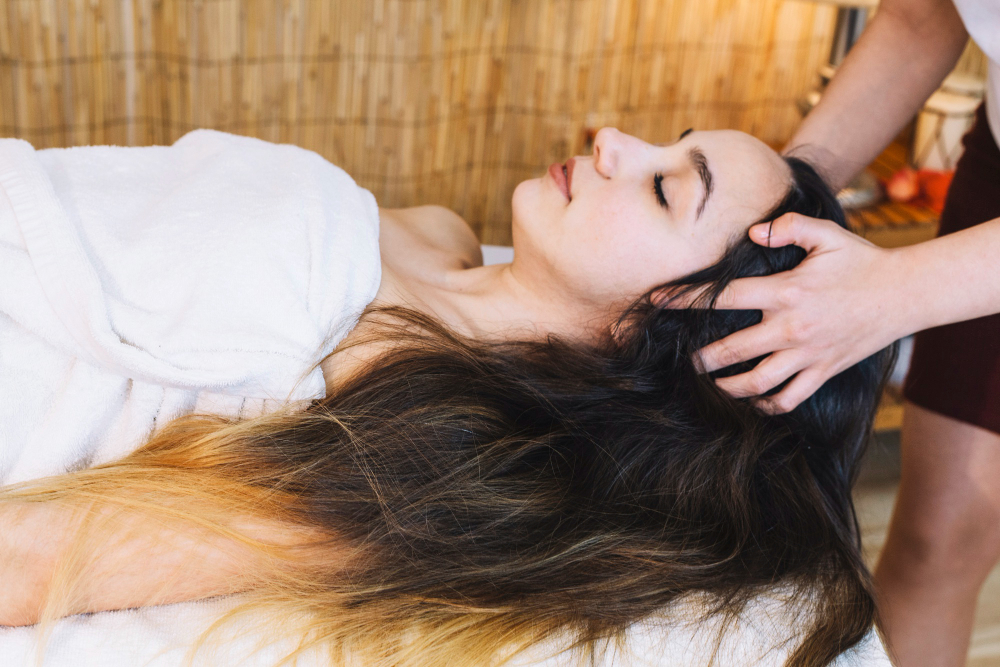
At the beginning of the sirovasthi procedure, the guest sits comfortably in a chair while the therapist gently massages the head, neck, and shoulders.
This stage prepares the person for the main therapy and creates a calm transition into the oil-retention process.
3. Preparing the Oil-Retaining Enclosure
Next comes the feature that makes this Ayurvedic head therapy distinctive.
The therapist creates a crown-like enclosure around the head. At Sitaram Retreat, a rexine sheet is shaped like a crown or hat and secured around the head using dough.
The secure enclosure forms a “well” over the head so that the medicated oil can remain contained during treatment.
4. Adding Warm Medicated Oil
Once the enclosure is secure, warm medicated oil is carefully poured into the prepared space.
The choice of therapy and its application are guided by the person’s Ayurvedic assessment. This is one reason Sirovasthi should be performed under appropriate professional guidance rather than attempted as a home oil treatment.
5. Retaining the Oil
Oil retention is the defining stage of the sirovasthi procedure.
At Sitaram Retreat, the warm medicated oil is retained for approximately 30–45 minutes. The therapy is completed according to the Ayurvedic physician’s instructions and the individual’s care plan.
This 30–45-minute period refers specifically to oil retention. The complete appointment may take longer because massage, preparation, and completion are additional parts of the experience. Learn the panchakarma meaning to understand the principles of this traditional Ayurvedic practice and its role in supporting overall wellness.
What Happens After the Sirovasthi Procedure?
Once the prescribed retention period is complete, the therapist carefully concludes the session according to the treatment plan.
After the sirovasthi procedure, it is sensible to follow the specific instructions given by the Ayurvedic team. The recommendations may differ depending on your constitution, reason for undergoing the therapy, and whether Sirovasthi forms part of a broader wellness programme.
Instead of planning strenuous activities immediately around an Ayurvedic therapy, allow your schedule to accommodate the experience and any practitioner-recommended rest or routine.
What Oil Is Used During Sirovasthi?
There is no reason to assume that one medicated oil is appropriate for every person.
Ayurvedic treatment is individualised, and the therapeutic approach may vary according to constitution, condition and treatment goals. At Sitaram Retreat, Ayurvedic care can include personalised choices of therapies, oils, herbs, diet and supportive practices.
The important consideration is therefore not simply, “Which oil is best for Sirovasthi?” but which therapeutic approach is appropriate for the individual.
This is also why professional Ayurvedic assessment is an important part of the experience.
Traditional Benefits of Sirovasthi Therapy
Within traditional Ayurvedic practice, Sirovasthi is used as part of care for selected concerns involving the head and for supporting relaxation and wellbeing.
Its traditional applications may include support for:
- Head and neck relaxation
- Certain types of headaches
- Dryness of the nostrils and throat
- Selected concerns involving the head, ears, eyes and nose
- Certain nervous-system-related concerns
- Certain psychosomatic concerns
- Mental relaxation and general wellbeing
- Mental functioning
These are traditional Ayurvedic applications rather than guaranteed medical outcomes. Sirovasthi should not replace diagnosis or treatment from an appropriate healthcare professional for a medical condition.
Who May Consider the Sirovasthi Procedure?
The sirovasthi procedure may be considered by people exploring traditional Ayurvedic head therapies as part of an individually designed wellness or therapeutic programme.
However, reading a list of traditional benefits is not enough to decide whether the therapy is suitable for you.
An Ayurvedic physician should first assess factors relevant to your individual condition and treatment goals. This becomes especially important if you have an existing health condition, are receiving medical treatment, or are considering Sirovasthi for a specific symptom.
Personalisation is a fundamental part of responsible Ayurvedic care.
Sirovasthi vs Shirodhara: What Is the Difference?
Sirovasthi and Shirodhara are both traditional Ayurvedic head therapies, but their techniques are different.
Sirovasthi involves creating a secure enclosure over the head and retaining warm medicated oil within it for a prescribed period.
Shirodhara, on the other hand, involves a steady, rhythmic stream of warm liquid flowing over the forehead. Depending on the treatment, this liquid may include oil, decoction, milk or buttermilk.
The easiest distinction to remember is:
- Sirovasthi: the medicated oil is retained over the head.
- Shirodhara: the chosen liquid flows continuously over the forehead.
Neither therapy should be selected simply because one sounds more relaxing or convenient. The appropriate Ayurvedic approach depends on the individual’s assessment. Discover what is shirodhara to learn about this traditional Ayurvedic therapy, its procedure, and its potential role in relaxation and stress management.
How Long Does the Sirovasthi Procedure Take?
During the sirovasthi procedure, the warm medicated oil is typically retained for approximately 30–45 minutes at Sitaram Retreat.
The complete session involves more than oil retention. Time is also required for the initial head, neck, and shoulder massage, preparation of the crown-like enclosure, careful addition of the oil, and completion of the treatment.
The precise experience may therefore vary according to the individual’s Ayurvedic care plan and the physician’s instructions.
What to Expect From Sirovasthi at Sitaram Retreat
At Sitaram Retreat, Sirovasthi is approached within a wider tradition of personalised Ayurvedic care. The focus begins with understanding the individual rather than choosing a therapy from a list.
Your experience may involve:
- Consultation and Ayurvedic assessment
- An individually planned therapeutic approach
- Practitioner-guided treatment
- Head, neck and shoulder massage
- Carefully administered warm medicated oil
- Guidance based on your wider Ayurvedic programme
This approach keeps the sirovasthi procedure connected to its traditional context while ensuring the treatment plan considers the person receiving it.
Experience Personalised Sirovasthi Therapy at Sitaram Retreat
The value of an Ayurvedic therapy lies not simply in following its steps, but in understanding when, why, and for whom it is appropriate.
At Sitaram Retreat, Sirovasthi is delivered within a personalised Ayurvedic care experience, beginning with consultation and individual assessment. Our approach brings together traditional therapies with a wider wellness environment that includes Ayurveda, yoga, meditation and Ayurvedic cuisine.
If you are considering Sirovasthi, begin by understanding whether the therapy is right for your individual needs.
Explore Sirovasthi Therapy at Sitaram Retreat and take the next step towards a personalised Ayurvedic experience.
Frequently Asked Questions
Q1. How is the Sirovasthi procedure performed?
The sirovasthi procedure begins with a head, neck, and shoulder massage. A crown-like enclosure is then secured around the head, creating a well in which warm medicated oil is retained for approximately 30–45 minutes.
Q2. How long is oil kept on the head during Sirovasthi?
The warm medicated oil is typically retained for approximately 30–45 minutes at Sitaram Retreat. The complete therapy session may take longer because preparation and massage are separate stages.
Q3. Can Sirovasthi be done at home?
Sirovasthi involves warm medicated oil, a secure oil-retaining enclosure, and individual treatment considerations. It is best performed under appropriate professional guidance rather than attempted as a DIY head-oil treatment.
Q4. Can everyone undergo Sirovasthi?
No therapy is automatically appropriate for everyone. Suitability should be determined after individual assessment by an Ayurvedic physician, particularly when a person has existing health concerns.
Q5. Is Sirovasthi the same as Shirodhara?
No. Sirovasthi retains warm medicated oil over the head inside an enclosure, whereas Shirodhara uses a continuous, rhythmic stream of liquid over the forehead.
Q6. Will one Sirovasthi session be enough?
The appropriate number of sessions cannot be generalised. An Ayurvedic physician determines the treatment approach according to the individual’s condition, needs and wider care plan.
Q7. What are the traditional uses of Sirovasthi?
Traditionally, Sirovasthi is used within Ayurveda for selected head-related and nervous-system-related concerns and to support relaxation, mental wellbeing and mental functioning.
Q8. Why is medicated oil used in Sirovasthi?
Medicated oil forms the central therapeutic medium of Sirovasthi. Its selection and use form part of the personalised Ayurvedic approach and should be guided by the individual’s assessment.
TABLE OF CONTENTS
- What Is Sirovasthi in Ayurveda?
- Sirovasthi Procedure: What Happens Step by Step?
- What Happens After the Sirovasthi Procedure?
- What Oil Is Used During Sirovasthi?
- Traditional Benefits of Sirovasthi Therapy
- Who May Consider the Sirovasthi Procedure?
- Sirovasthi vs Shirodhara: What Is the Difference?
- How Long Does the Sirovasthi Procedure Take?
- What to Expect From Sirovasthi at Sitaram Retreat
- Experience Personalised Sirovasthi Therapy at Sitaram Retreat
- Frequently Asked Questions